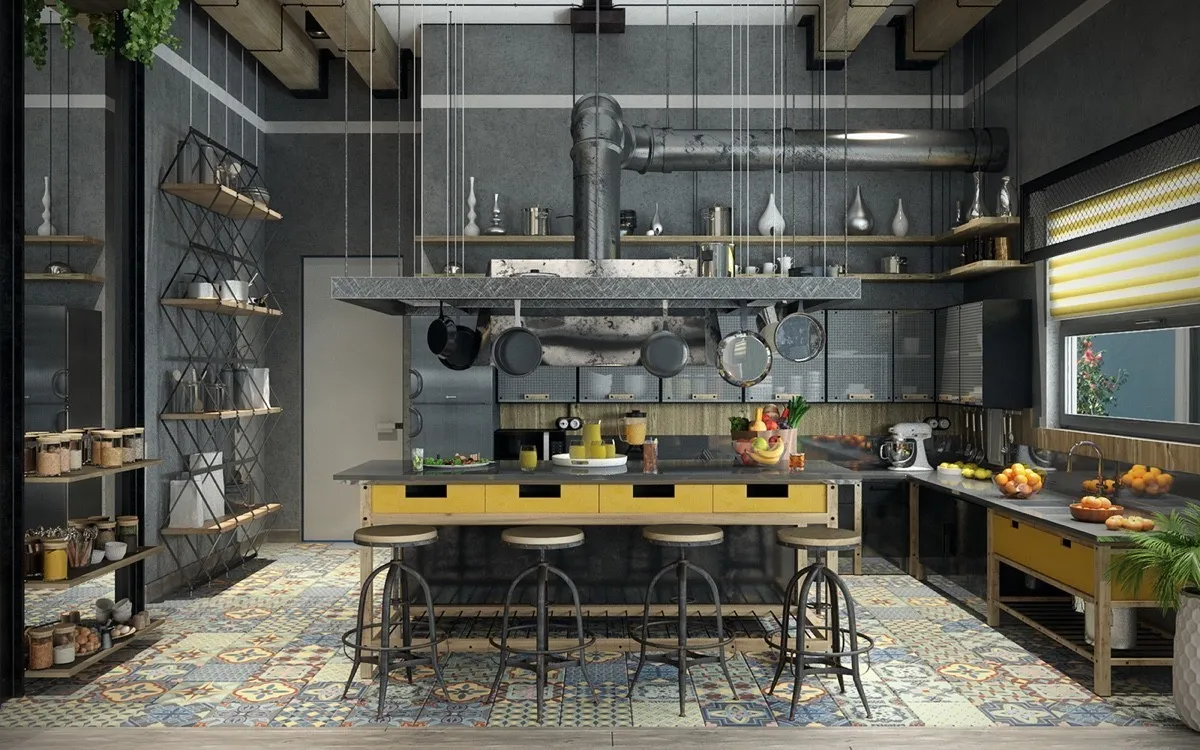
Embracing the Industrial Chic Kitchen
Industrial chic kitchen decor is a stylish and increasingly popular design trend that combines raw, utilitarian elements with modern design. It’s a look that celebrates the beauty of imperfection, using materials like exposed brick, metal, and wood to create a space that feels both edgy and inviting. This aesthetic, originating from the repurposing of industrial spaces into living areas, has found its way into kitchens, offering a unique blend of functionality and design. The core concept involves highlighting the structural components of a space and incorporating raw materials in a sophisticated way. It’s about creating a kitchen that feels authentic, with a focus on materials and functionality over overly polished surfaces. Embracing this style means appreciating the character of raw materials and the history they represent, resulting in a kitchen that is both visually striking and a pleasure to cook and gather in. It’s a design approach that suits both those who appreciate history and those seeking a more modern, minimalist approach.
Exposing the Architectural Elements
One of the defining characteristics of industrial chic is the deliberate exposure of architectural elements. This means leaving structural components visible, celebrating the bones of your kitchen. Exposed ductwork, pipes, and beams become integral parts of the decor. This creates a sense of openness and adds visual interest. Instead of concealing these elements, industrial design encourages you to make them features. This approach contrasts with traditional designs that often strive for a clean, seamless look, emphasizing the raw and unfinished feel that characterizes this style. Think of it as a celebration of the building’s structure, with imperfections adding character and authenticity. Painting ductwork or pipes in bold colors can further enhance this look, providing a focal point within the space. The key is to view these elements not as flaws but as opportunities to enhance the overall aesthetic of your kitchen.
The Power of Exposed Brick

Exposed brick walls are a quintessential element of industrial chic kitchens, providing a warm, textural backdrop that adds character and history. Whether it’s the original brick of a converted industrial space or brick veneer installed for the aesthetic, this material instantly transforms a kitchen. The imperfections and variations in color and texture of the brick create a sense of depth and authenticity that’s hard to replicate. When incorporating exposed brick, consider its color and how it complements other elements. A darker brick can create a dramatic, moody atmosphere, while lighter shades can brighten the space. You can also paint the brick to match the overall color scheme of your kitchen. The rough surface also contrasts beautifully with sleek metal and wood finishes, creating a dynamic visual interplay. It’s a versatile material that can be adapted to various design preferences.
Highlighting Metal Accents
Metal accents are essential in achieving the industrial chic look, with materials like stainless steel, iron, and copper playing a prominent role. Incorporate metal through appliances, hardware, lighting fixtures, and decorative items. Stainless steel appliances are a natural fit, offering a sleek, professional aesthetic. Hardware, such as cabinet pulls and knobs in brushed nickel or iron, can add subtle touches of industrial charm. The use of metal extends beyond functionality; metal accents are used to enhance visual appeal. Consider incorporating metal pendant lights, open shelving with metal supports, or even metal-framed mirrors. The key is to balance the metal elements to create a cohesive look, avoiding a space that feels too cold or sterile. Consider the finish of the metal and how it interacts with the lighting in the space. Different metals, when combined effectively, can create layers of texture and interest, adding depth to your kitchen.
Choosing the Right Lighting
Lighting plays a crucial role in the industrial chic kitchen. It sets the tone and enhances the raw, utilitarian aesthetic. The goal is to choose fixtures that are both functional and stylish, reflecting the industrial theme. Opt for exposed bulb pendant lights, track lighting, and metal-framed fixtures to create a layered lighting scheme. The choice of light bulbs also matters; Edison bulbs, with their warm, glowing filaments, are a perfect match for the industrial look. They add a vintage touch and create a cozy atmosphere. Consider using a mix of task lighting (over countertops and the island), ambient lighting (from ceiling fixtures), and accent lighting (to highlight architectural details). The right lighting can dramatically transform the ambiance of your kitchen, making it feel inviting and visually appealing. Dimmer switches allow you to adjust the lighting to suit different times of the day and activities.
Pendant Lights and Track Lighting

Pendant lights and track lighting are two essential lighting options that enhance the industrial chic aesthetic in the kitchen. Pendant lights, often featuring exposed bulbs and metal shades, provide focused lighting over islands or countertops, adding a touch of visual interest. Track lighting, with its adjustable spotlights, offers a flexible solution for illuminating specific areas or highlighting architectural features. Choosing the right style of pendant lights is crucial; consider materials like metal, glass, or even concrete to complement the overall design. When selecting track lighting, look for fixtures with a raw, industrial finish, such as brushed nickel or black iron. Ensure that the lighting is not only aesthetically pleasing but also provides sufficient illumination for cooking and food preparation. Both pendant lights and track lighting, when used effectively, can add character and functionality to an industrial chic kitchen.
Selecting the Perfect Color Palette
The color palette in an industrial chic kitchen typically leans towards a neutral base, with pops of color added through accents and accessories. Think of shades like gray, black, white, and various tones of brown and beige. These colors provide a sophisticated backdrop for the raw materials and metal accents that define the style. While the base colors tend to be subdued, this is where you can introduce bolder colors through appliances, artwork, and kitchen utensils. The key is to balance the neutrals with the pops of color, creating visual interest without overwhelming the space. The colors should complement the industrial elements, enhancing the overall aesthetic rather than detracting from it. Considering the existing architectural elements, like exposed brick or ductwork, when selecting your color palette is also important. The right color choices will bring together all elements, creating a cohesive and appealing design.
Using Neutrals to Your Advantage
Neutrals are the cornerstone of the industrial chic kitchen design, providing a versatile canvas that allows the raw materials and metal accents to shine. Colors like white, gray, and black, and the various earth tones create a clean, balanced backdrop that enhances the industrial aesthetic. These neutral colors can be used for walls, cabinets, and countertops, creating a sense of spaciousness and allowing the other elements to stand out. Using different textures within the neutral palette adds visual interest and depth. For example, pairing a smooth, white countertop with a textured, gray brick backsplash creates a dynamic interplay of surfaces. Consider using a variety of shades of gray to create a layered effect, preventing the kitchen from feeling flat or dull. The strategic use of neutrals allows you to create a sophisticated, timeless kitchen with an industrial edge.
Incorporating Open Shelving

Open shelving is a quintessential element of industrial chic kitchen decor, offering both a functional and aesthetic advantage. It provides easy access to your kitchen essentials while adding to the raw, unfinished look that defines the style. The materials used in open shelving, such as reclaimed wood, metal pipes, or a combination of both, contribute to the industrial aesthetic. When using open shelving, it’s important to consider the items you’ll display. Select attractive cookware, glassware, and decorative items to showcase. Organization is also key; ensure that items are neatly arranged and curated to enhance the visual appeal. The open shelving also creates a sense of openness, making the kitchen feel larger and more inviting. Consider adding shelving to the walls and using the same materials as the other elements in your kitchen. This will help to create a cohesive design and connect the space.
Adding Rustic Touches
Adding rustic touches to your industrial chic kitchen enhances the warmth and character of the space. These elements can create a contrast to the sleek metal and raw materials, creating visual interest. Incorporate rustic elements through reclaimed wood, vintage furniture, and antique accessories. Reclaimed wood can be used for shelving, countertops, or even a kitchen island, adding a sense of history and authenticity. Vintage furniture, such as a farmhouse table or antique stools, can provide a cozy gathering space. Antique accessories, like enamelware pots or vintage scales, add to the overall aesthetic. The combination of rustic and industrial elements creates a harmonious balance, resulting in a space that feels both modern and inviting. The goal is to create a lived-in feel that balances the industrial elements. Don’t be afraid to mix and match different styles and textures to achieve a unique and personalized look.
The Importance of Functional Hardware
Hardware plays a crucial role in completing the industrial chic aesthetic of your kitchen, with the right choices enhancing both functionality and design. When selecting hardware, consider materials such as brushed nickel, wrought iron, or even copper, to complement the overall look. The choice of hardware can subtly enhance the industrial aesthetic. Cabinet pulls and knobs in a simple, utilitarian design can add a touch of industrial charm. Functionality is key, so make sure the hardware is comfortable to use and fits the size and style of your cabinets. The hardware should feel sturdy and durable, reflecting the raw, authentic nature of the industrial style. The style of hardware you choose will depend on your personal preferences and the overall design of your kitchen. The hardware should blend in with the other elements of your kitchen, creating a cohesive and appealing design.
The Role of Statement Appliances

Statement appliances are a vital component of the industrial chic kitchen, adding both style and functionality to the space. These appliances are not merely functional; they serve as design elements that can anchor the room and contribute to the overall aesthetic. Consider appliances with a retro, industrial-inspired design or those in stainless steel. Stainless steel appliances are a staple of the industrial look, with their sleek, professional aesthetic. The choice of appliances should complement the rest of your kitchen design. The appliances can be used to add pops of color and character to your kitchen. Consider choosing appliances that reflect the style. The appliances should be the focal point, reflecting a balance of design and functionality. These elements can also add to the overall theme and feel of your kitchen, making it both practical and visually stunning.
Accessorizing for the Industrial Look
Accessorizing is the final step in achieving the industrial chic kitchen. These elements bring personality and a sense of completion to the space. Use a mix of items, such as vintage signs, antique scales, and enamelware pots, to enhance the industrial theme. Consider incorporating elements like exposed shelving, vintage lighting, and metal accents. Keep your accessories to a minimum to maintain the overall clean and uncluttered aesthetic. Choose accessories that complement the raw, utilitarian elements of the industrial style. A few well-chosen items can make a significant difference. The accessories will also reflect your personality and add to the overall design of your kitchen. The goal is to create a space that feels authentic, with a focus on materials and functionality. The right accessories will transform your kitchen into a unique space.