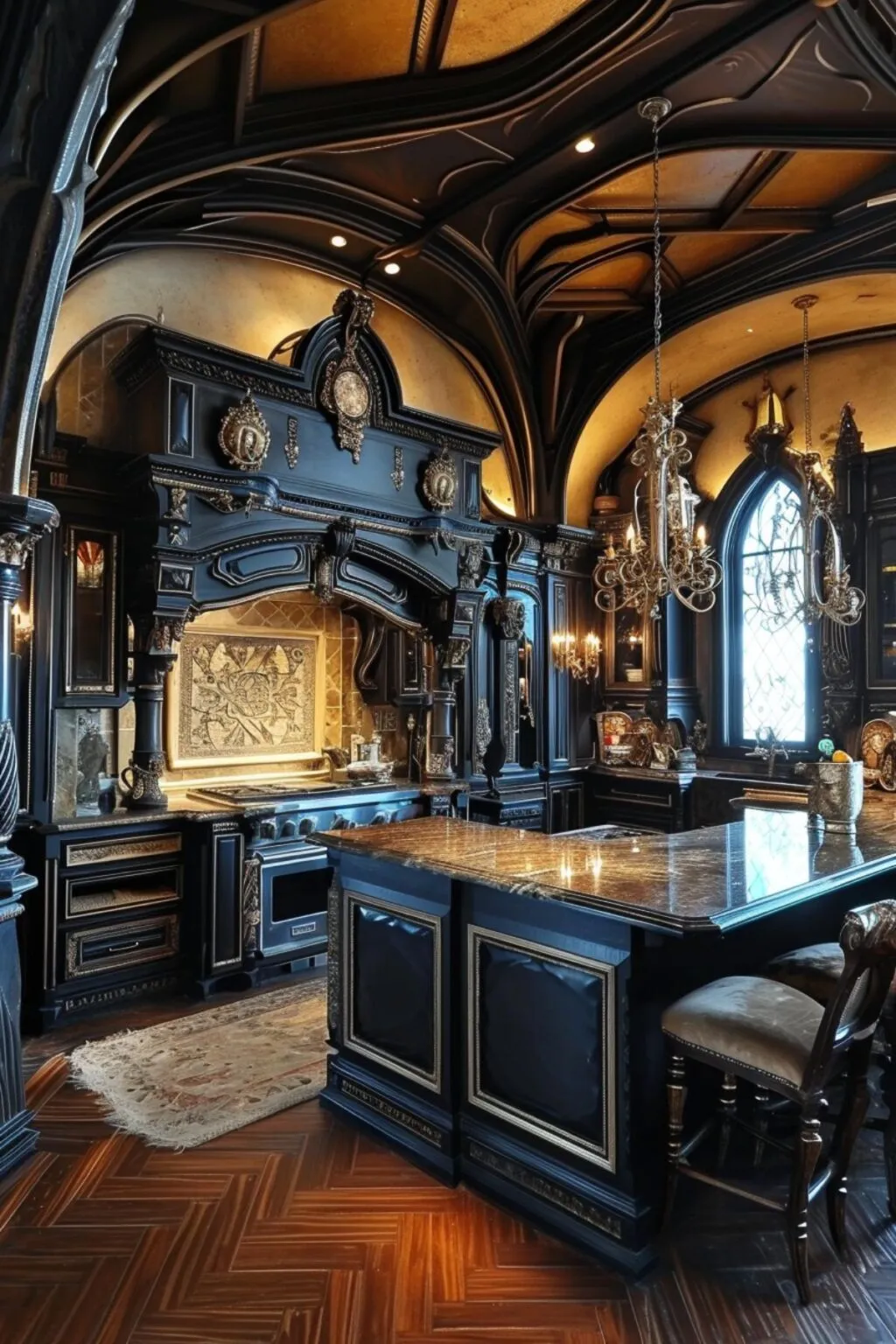
Embracing Gothic Kitchen Decor
Gothic kitchen decor offers a captivating blend of elegance and mystique, transforming the heart of your home into a space of dramatic beauty. The aesthetic draws inspiration from the architectural grandeur of the Gothic era, characterized by pointed arches, intricate details, and a sense of imposing serenity. Embracing this style in your kitchen allows you to create a unique and visually stunning environment that stands apart from conventional designs. The allure of Gothic decor lies in its ability to evoke a feeling of timelessness, mystery, and sophistication, making it an excellent choice for those seeking a distinctive and memorable kitchen space. Its appeal extends to both traditional and modern homes, as the style can be adapted to fit various layouts and preferences. By carefully selecting the right elements, you can infuse your kitchen with the gothic spirit, creating a space that is both functional and breathtakingly beautiful.
Understanding the Gothic Aesthetic
Understanding the core principles of the Gothic aesthetic is the first step towards creating a successful gothic kitchen. At its heart, Gothic design is about creating an atmosphere of grandeur and mystery. It often features dark, rich colors, ornate detailing, and a sense of drama. The style frequently incorporates elements such as pointed arches, which can be found in the design of cabinet doors or even the architecture of the space. Intricate patterns, such as those found in stained glass or wrought iron, are also common features. The use of heavy, substantial materials like dark wood, stone, and metal adds to the overall feeling of solidity and permanence. It’s a style that values craftsmanship and artistry, so the quality of the materials and the attention to detail in the design are very important. It is the marriage of these aspects which create the essence of gothic design.
Key Elements of Gothic Design

Several key elements define the gothic design. One of the most prominent features is the use of dark and moody color palettes. Deep hues such as black, charcoal, deep reds, and purples set the tone for the space, contributing to its mysterious ambiance. Intricate architectural details are also important, including pointed arches and ribbed vaulting, which can be incorporated through the design of cabinetry, backsplashes, or even decorative moldings. The use of wrought iron, whether in the form of chandeliers, cabinet hardware, or decorative accents, is another essential element. The texture of materials adds depth and visual interest, creating a sense of opulence. The choice of materials like stone, dark wood, and velvet fabrics further enhance the gothic atmosphere. Finally, the strategic use of lighting, including chandeliers and sconces, is vital in creating the desired mood and highlighting the key elements of the space. These are important elements that can transform a regular kitchen to an elegant gothic kitchen.
Dark Color Palettes for Gothic Kitchens
The color palette is fundamental to establishing the gothic ambiance of your kitchen. Dark colors form the cornerstone of this style, with blacks, deep grays, and rich jewel tones taking center stage. The use of black or charcoal on cabinetry can create a striking foundation, while accents of deep red, burgundy, or plum can add warmth and complexity. Incorporating deep greens or even dark blues can provide another layer of visual interest. When choosing your color palette, consider the amount of natural light your kitchen receives. Darker colors work best in spaces with ample natural light. If your kitchen is naturally dim, you can still embrace the gothic aesthetic by balancing darker tones with lighter accents, such as cream or pale gray. These lighter shades can be used on walls or in countertops, creating a visually balanced and inviting space. Experiment with the shades and find what works best for your gothic kitchen. The use of metallic accents like gold, silver or bronze can add a touch of luxury.
Incorporating Dramatic Lighting
Lighting plays a crucial role in setting the mood and enhancing the gothic atmosphere. Chandeliers are a quintessential element, with their intricate designs and dramatic presence. Choose chandeliers made of wrought iron or featuring crystal accents to add an element of glamour. Sconces can be placed along walls to provide ambient lighting, while pendant lights over the island can offer focused illumination. Consider using Edison bulbs or bulbs with a warm, inviting glow to enhance the cozy atmosphere. The strategic use of dimmers is another key element, allowing you to adjust the lighting levels to create different moods and ambiances. The placement of lighting is equally important, so focus on highlighting key areas and architectural features. Don’t underestimate the impact of candles or candle-style lighting, which can add a touch of romance and mystery, enhancing the gothic appeal of your kitchen.
Choosing Gothic-Inspired Furniture

Furniture selection is key to reinforcing the gothic theme. Choose pieces that feature dark wood finishes, ornate carvings, and substantial designs. Consider a kitchen island with intricate details, such as carved legs or a stone countertop. The use of high-backed chairs with velvet or leather upholstery can add a touch of luxury and sophistication. Think about incorporating a dining table with a dark wood finish and a sturdy, imposing presence. When choosing your furniture, prioritize quality and craftsmanship, as these details are essential to the overall gothic aesthetic. If space permits, incorporate a vintage or antique cabinet to serve as a display piece or storage unit. Be sure to incorporate the key elements of gothic design into the furniture pieces to create the feel you want.
Selecting Intricate Decorative Accents
Decorative accents are the finishing touches that complete the gothic look. Incorporate wrought iron candle holders, ornate mirrors with dark frames, and gothic-style clocks. Display antique silver, pewter, or crystal items on open shelves or within a glass-front cabinet. Hang artwork featuring dark landscapes, portraits, or still lifes to reinforce the gothic theme. The use of decorative accessories adds personality to the kitchen. Consider adding touches of gothic design to the kitchen’s decor such as ornate picture frames and ceramic items. These kinds of accents are the final touches to creating a gothic kitchen with a luxurious feel. Ensure you don’t overwhelm the space and maintain a balance between elegance and drama.
Adding Gothic Kitchen Decor with Textiles
Textiles can play a significant role in adding depth and texture to your gothic kitchen. Incorporate velvet or damask fabrics for window treatments or seat cushions to evoke luxury and richness. Consider using tablecloths or runners with intricate patterns or dark colors. The textiles used in the kitchen can elevate the overall look of the space. Add decorative pillows with gothic-inspired patterns to chairs or seating areas to add comfort and style. When choosing textiles, make sure they complement the color palette and contribute to the atmosphere. If the kitchen is going to be fully gothic, it is important to choose materials that fit well into that design. Select fabrics in deep, saturated colors to enhance the sense of drama and sophistication. This helps make the kitchen more elegant, and can be an important step in creating a gothic kitchen.
Creating a Cohesive Gothic Kitchen

To create a truly cohesive gothic kitchen, it is important to consider all the elements and how they interact. Start with a clear vision of the look you want to achieve. Then, select a core color palette and stick to it throughout the design. Think about the proportions of the room. A well designed kitchen requires all elements to blend well. Maintain a balance between dark and light elements to prevent the space from feeling too heavy. Pay attention to the details, from the hardware on your cabinets to the frames of your artwork. Ensure that all the elements work together to create a harmonious and stunning space. It is important to ensure all of the different parts work together to create an overall aesthetic. Don’t be afraid to mix and match styles, but be sure that they complement each other. This will help achieve the desired aesthetic and result in a visually striking kitchen that captures the essence of gothic elegance.