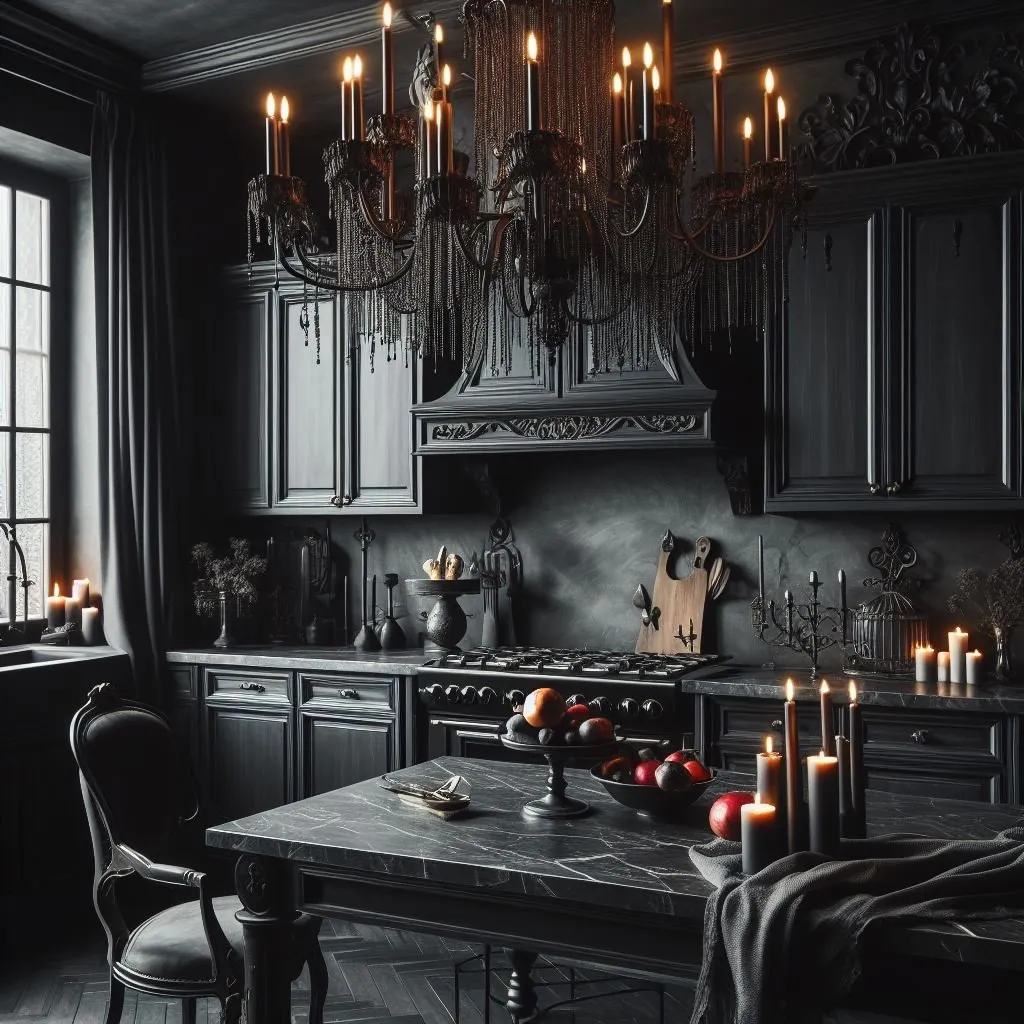
Understanding Gothic Kitchen Decor
Gothic kitchen decor is a striking and elegant style, drawing inspiration from the architecture and artistry of the Gothic period. It’s characterized by dark colors, ornate details, and a sense of drama. This style is more than just a trend; it’s a statement of sophistication and a celebration of the dramatic. Transforming your kitchen into a gothic space can be an exciting project, creating a unique and personalized environment that reflects your taste. The aim is to create a space that is both functional and visually stunning, blending historical aesthetics with modern conveniences. It’s about embracing the shadows, the textures, and the exquisite details that define this timeless style.
The Allure of Gothic Design
The allure of Gothic design lies in its ability to evoke a sense of mystery, luxury, and grandeur. This style is often associated with old castles, cathedrals, and historical romance. The design creates an atmosphere of timeless elegance. The use of rich, deep colors, intricate carvings, and dramatic lighting offers a unique sensory experience, transforming your kitchen into a space that feels both personal and enchanting. This makes the gothic style a compelling choice for those who want to move beyond the conventional and express a sense of individuality in their home decor. It’s a style that values detail, craftsmanship, and the dramatic use of space, offering an escape from the everyday.
Key Elements of Gothic Kitchens

To successfully incorporate Gothic elements into your kitchen, it’s important to understand the key features that define the style. Think high ceilings, dark wood, and intricate metalwork. Think pointed arches, stained glass, and heavy, ornate furniture. The use of natural materials such as stone and wrought iron is also typical, adding to the aesthetic’s authentic feel. These elements, when combined, create a space that’s both visually stunning and deeply evocative. The aim is to create a kitchen that is both functional and visually appealing, incorporating all of the key design elements while maintaining a sense of balance and practicality.
Color Palette and Materials
Dark and Moody Color Schemes
The color palette of a Gothic kitchen typically leans towards the darker side, with deep hues creating a sense of drama and luxury. Think rich blacks, deep reds, and dark greens. These colors create an intimate and dramatic environment, enhanced by the play of light and shadow. To add a touch of contrast, consider incorporating metallic accents like gold or silver. This juxtaposition adds depth and complexity to the design while staying true to the gothic aesthetic. The dark colors should not overwhelm the space; use lighter shades strategically to balance them out, creating a perfect moody and elegant atmosphere.
Material Choices for Gothic Kitchens

Choosing the right materials is crucial to achieving a Gothic kitchen aesthetic. Dark wood, particularly oak or mahogany, is a staple, often used for cabinets, floors, and furniture. Natural stone, such as granite or marble, is also a popular choice for countertops and backsplashes, providing durability and adding to the luxurious feel. Wrought iron elements, like decorative hardware or lighting fixtures, can contribute to the gothic atmosphere. Consider incorporating velvet, leather, or other textured fabrics to add a touch of softness and contrast to the more rigid materials. These materials should complement each other to create a cohesive and visually appealing design.
Furniture and Fixtures
Choosing Gothic-Inspired Furniture
When selecting furniture for your Gothic kitchen, look for pieces with strong lines, ornate details, and a sense of history. Dining tables and chairs with dark finishes, high backs, and intricate carvings are excellent choices. Consider including a kitchen island with detailed woodwork or a large, imposing hutch to add storage and visual interest. Antique or vintage furniture can add authenticity, but modern interpretations that capture the gothic spirit are also suitable. The furniture should not only be functional but also contribute to the overall aesthetic, completing the dramatic and elegant atmosphere.
Selecting Fixtures and Hardware

Fixtures and hardware can make a big difference in the final look of your Gothic kitchen. Opt for cabinet knobs, pulls, and faucets in dark metals, such as bronze, iron, or pewter. These materials add a touch of vintage and classic charm. Light fixtures should be equally dramatic, with chandeliers, sconces, and pendant lights featuring intricate designs and dark finishes. Consider adding wrought iron details to create a cohesive gothic aesthetic. This includes selecting fixtures that complement the overall design theme. Think about the functional and decorative aspects of each piece, ensuring a stunning, coordinated final look.
Adding Glamour to Your Gothic Kitchen
Incorporating Metallic Accents
To infuse glamour into your Gothic kitchen, incorporate metallic accents strategically. Gold, silver, and copper can add a touch of luxury and visual interest. Use these metals in your cabinet hardware, lighting fixtures, and decorative accessories. Gold-framed mirrors, silver candelabras, or copper pots can add sophistication to your space. Avoid overdoing it; use these accents to create a balance. Think about the areas in which you can place these accents to create the best visual outcome. This approach creates a luxurious and sophisticated environment while staying true to the gothic style.
Lighting and Ambiance

Selecting Gothic Lighting Fixtures
Lighting is critical in establishing the right ambiance. Gothic kitchens benefit from dramatic lighting fixtures such as chandeliers, sconces, and pendant lights. Look for fixtures with intricate designs, dark finishes, and a medieval aesthetic. Chandeliers with crystal accents can add a touch of glamour. Sconces can be placed along the walls, while pendant lights can be hung over the island or dining area. The lighting should not only provide functional illumination but also contribute to the gothic aesthetic. The strategic use of lighting creates the desired atmosphere, enhancing the dramatic aesthetic of your kitchen.
Creating the Right Ambiance
To create the right ambiance, consider the type of lighting you use. Layer different light sources, including overhead lights, task lighting, and ambient lighting, to create a balanced and inviting atmosphere. Dimmers are a must, allowing you to adjust the intensity of the light based on the occasion. Candles can add a warm and romantic touch, enhancing the gothic aesthetic. The lighting should create a sense of mystery, drama, and sophistication. This adds depth to the kitchen, transforming the space into a captivating place.
Accessories and Finishing Touches

Choosing Gothic Accessories
Accessories are essential for completing the gothic look. Choose items that reflect the style’s rich history, such as ornate candlesticks, antique mirrors, and decorative plates. Gothic-inspired art, like dark landscapes or portraits, can add to the aesthetic. Consider including antique silverware, vintage glassware, and gothic-style dinnerware. Focus on details that complement the overall theme. This includes accessories that add a sense of history and personality, completing the transformation of your kitchen. These elements will complete the look and make your kitchen feel personal and elegant.
Finishing Touches to Elevate the Look
To elevate the look, pay attention to the finishing touches. Place antique books on open shelves, use textured fabrics for curtains, and add plush cushions to chairs. Consider displaying gothic-style decorative items, such as figurines, sculptures, or crosses. Incorporate elements that add to the overall aesthetic. These touches will transform the space and make it feel complete. This includes creating a kitchen that is both functional and beautiful, capturing the essence of gothic design.
Maintaining Your Gothic Kitchen

Cleaning and Care Tips
Maintaining a Gothic kitchen involves specific cleaning and care practices to preserve the beauty of its materials. Dark wood requires regular dusting and polishing to maintain its luster. Use appropriate cleaning products for stone and metal surfaces to avoid damage. Avoid harsh chemicals that could harm the finish. Regularly clean lighting fixtures, accessories, and other decorative items to prevent dust buildup. Keep an eye out for issues. Follow these tips for optimal upkeep, and protect your kitchen’s elegance and functionality.
Preserving the Gothic Aesthetic
Preserving the Gothic aesthetic requires consistent care and attention. Protect the materials from excessive moisture, heat, and sunlight. Consider using protective treatments for wood and stone surfaces. Regularly inspect fixtures and furniture for any signs of wear or damage. This will ensure your kitchen retains its unique gothic character and charm for years to come. By following these practices, you can create a kitchen that retains its dramatic and elegant appeal.