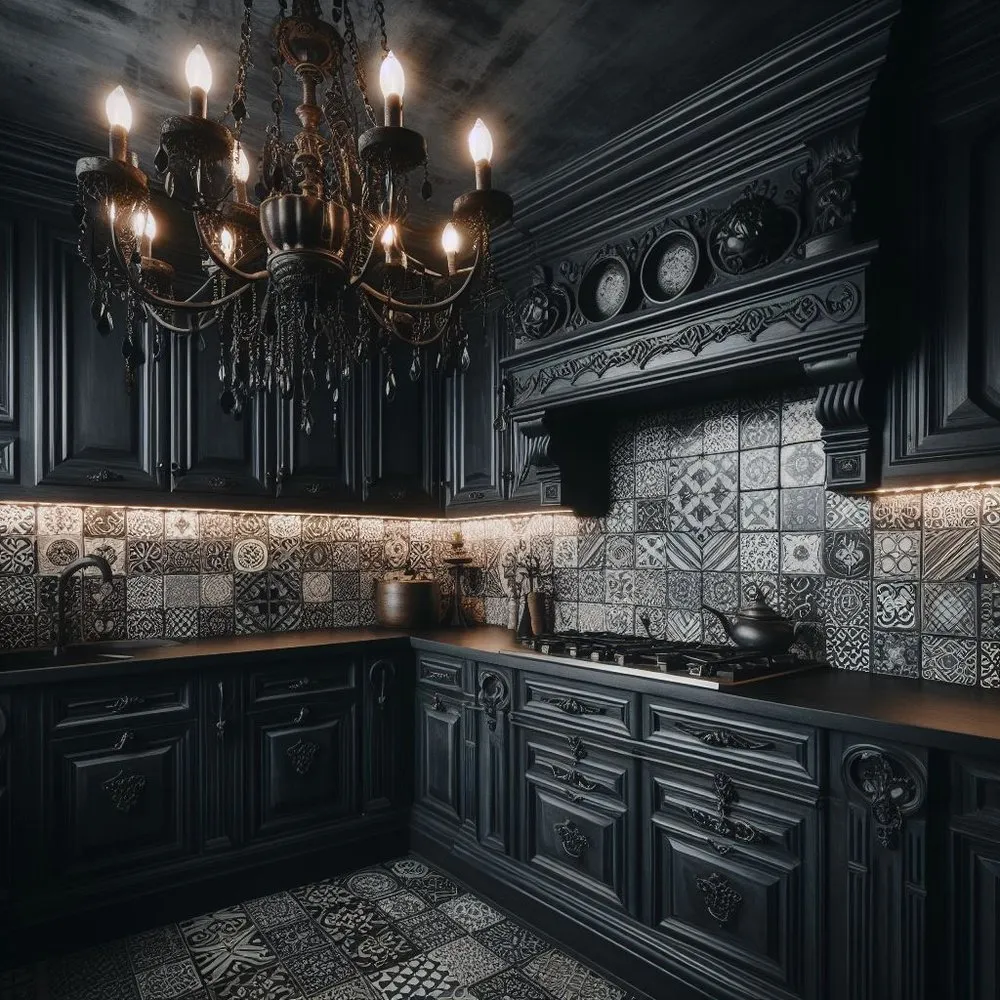
What is Gothic Kitchen Decor
Gothic kitchen decor is a unique and captivating design style that draws inspiration from the architectural and artistic elements of the Gothic period, which flourished in Europe from the mid-12th century to the late 16th century. This style is characterized by its dramatic, mysterious, and often romantic aesthetic, incorporating elements like dark colors, intricate details, and a sense of history. In the context of a kitchen, gothic decor transforms the space into a moody, elegant, and visually stunning environment. It’s a design choice for those who appreciate a sense of depth, sophistication, and a touch of the macabre, creating a kitchen that feels both grand and intimate.
Elements of Gothic Design
Several key elements define the Gothic design aesthetic. Architectural features are very important; think of high, pointed arches, vaulted ceilings, and ribbed vaults, which add height and a sense of grandeur. Intricate details, such as ornate carvings, detailed moldings, and complex patterns, are also central to Gothic design. Dark, rich colors like deep reds, purples, blacks, and forest greens, along with metallic accents like gold, silver, and bronze, create a dramatic and opulent atmosphere. The use of natural light, often filtered through stained-glass windows, is another critical element, casting colored light and shadows that enhance the sense of mystery and drama. Incorporating these elements into a kitchen requires careful planning and a keen eye for detail, ensuring a cohesive and visually striking result.
Key Colors for a Gothic Kitchen

The color palette of a gothic kitchen plays a crucial role in setting the mood. Deep, saturated colors are the cornerstone of this design style. Think about using shades like charcoal, black, and deep burgundy, which create a sense of drama and sophistication. Dark greens, such as forest or emerald, can add depth and a connection to nature. Incorporating metallic accents in gold, silver, or bronze adds touches of luxury and enhances the overall aesthetic. Using these colors on walls, cabinetry, and decorative elements helps to establish a cohesive and visually striking atmosphere. While the dominant colors tend to be dark, incorporating lighter shades, such as beige or cream, can provide balance and prevent the space from feeling overly heavy or claustrophobic, especially in smaller kitchens. These lighter colors can be used on walls or as accents to create visual interest and prevent the space from feeling overly dark.
The Role of Beige in Gothic Decor
While the Gothic style often embraces deep, dark hues, the inclusion of beige can provide a crucial element of balance and versatility. Beige serves as a neutral backdrop that softens the dramatic intensity of darker colors. It brings warmth and light to the space, preventing it from feeling overly somber. Beige can be used on walls, cabinets, or even flooring to create a sense of airiness and spaciousness, particularly in kitchens with limited natural light. This contrast between light and dark enhances the overall gothic aesthetic, allowing the rich tones and intricate details to stand out. The right shade of beige can also complement other Gothic elements, such as dark wood furniture, metallic accents, and ornate decorations. In essence, beige provides a versatile foundation that enhances the gothic aesthetic, creating a space that feels both dramatic and inviting.
Beige as a Neutral Backdrop
Using beige as a neutral backdrop in a gothic kitchen offers several advantages. It lightens the space, preventing it from feeling too dark or enclosed. Beige walls and cabinets can create a sense of openness, especially in kitchens where natural light is limited. This approach allows the other Gothic elements, such as dark furniture, metallic accents, and ornate details, to stand out without overwhelming the space. Beige provides a versatile foundation that can be easily paired with various gothic design elements. It also adds warmth, preventing the kitchen from feeling cold or sterile. Different shades of beige, from warm, creamy tones to cooler, more muted hues, can be chosen to complement the overall design scheme. The key is to select a shade that enhances the other design elements, creating a balanced and visually appealing space. It allows the other design elements to pop without the space feeling too heavy or dark.
Creating the Right Ambiance

Creating the right ambiance in a gothic kitchen involves a careful selection of elements that evoke the desired mood. Lighting is extremely important, with options like chandeliers, sconces, and pendant lights playing a key role. Choose fixtures with intricate designs, dark metal finishes, and possibly candle-like bulbs. Consider using dimmer switches to control the light intensity, allowing for a range of moods from bright and functional to dimly lit and dramatic. The use of candles, both real and artificial, can also add a touch of gothic charm and romance. Music, art, and decor can enhance the atmosphere even further. Select artwork with gothic themes, such as medieval landscapes, portraits, or abstract pieces. Play classical or ambient music to set a mood. The right textures and materials also contribute significantly to the overall effect. The result will be a kitchen that feels both elegant and mysterious, a perfect representation of the gothic aesthetic.
Incorporating Gothic Elements
There are several ways to incorporate Gothic elements into your kitchen. Architectural details can play a significant role. Consider adding elements like arched doorways or windows, which are signature features of Gothic design. If a full renovation isn’t possible, you can add gothic-inspired molding and trim. When it comes to furnishings, look for dark wood cabinets with ornate carvings and hardware. Tables and chairs with intricate designs, high backs, or dark upholstery can also enhance the aesthetic. Decorative items are crucial. Incorporate gothic-inspired artwork, such as medieval-style paintings, dark-colored tapestries, and religious iconography. Use metallic accents, such as candelabras, ornate bowls, and metal sculptures, to add a touch of luxury and drama. Finally, don’t underestimate the power of textiles. Curtains, table linens, and upholstery in rich, dark colors and textures can significantly contribute to the overall gothic theme.
Choosing the Right Furniture
Choosing the right furniture is essential for a gothic kitchen. Dark, rich wood is a staple. Opt for cabinets, tables, and chairs made from wood like mahogany, walnut, or dark oak. Look for pieces with intricate details, such as carvings, raised panels, and decorative hardware. The style of furniture should reflect the Gothic period, so consider pieces with high backs, pointed arches, and gothic-inspired ornamentation. Consider incorporating a kitchen island with an ornate design, maybe with a dark stone countertop or a dark-stained wood finish. The dining table and chairs should complement the cabinetry and overall theme. Upholstered chairs with dark-colored fabrics, like velvet or leather, can add a touch of luxury. The goal is to create a space that feels both functional and aesthetically pleasing, blending the practicality of a modern kitchen with the dramatic flair of Gothic design. By carefully selecting the right furniture, you can set the tone and create a truly unique and captivating kitchen space.
Dark Wood and Ornate Details

Dark wood and ornate details are essential elements of gothic kitchen decor. Dark wood cabinets, tables, and chairs immediately convey the atmosphere, providing a rich, luxurious feel. Wood like mahogany, walnut, and dark oak are excellent choices, especially when paired with decorative hardware, such as wrought iron or antique brass. Intricate details such as carvings, moldings, and raised panels on cabinets add to the gothic aesthetic. Consider incorporating a kitchen island with an ornate design. These details contribute to a sense of history and craftsmanship, which is central to the gothic style. The combination of dark wood and intricate details enhances the mood and transforms the kitchen into a space that feels both elegant and mysterious. Whether it’s the dramatic contrast of dark wood against lighter walls or the subtle details on cabinet doors and furniture, these elements contribute to the overall aesthetic.
Adding Gothic Accents and Decor
Adding gothic accents and decor is an essential part of creating a cohesive and visually stunning kitchen space. Start by incorporating gothic-inspired artwork, such as medieval-style paintings, portraits, or abstract pieces with dark colors. Look for pieces with dramatic imagery and intricate frames to complement the overall theme. Use metallic accents like candelabras, ornate bowls, and metal sculptures to add a touch of luxury and drama. Consider adding gothic-style mirrors with ornate frames to reflect light and create a sense of depth. Display antique kitchenware, such as pewter plates, vintage silverware, and dark-colored glassware. The key is to choose pieces that reflect the gothic aesthetic. Don’t forget the power of textiles. Curtains, table linens, and upholstery in rich, dark colors and textures can contribute to the overall gothic theme. Be sure to include accessories that enhance the mood and complement the overall aesthetic, from the style of artwork to the choice of fabrics.
Lighting to Set the Mood
Lighting plays a crucial role in setting the mood of a gothic kitchen. The type of lighting, the style of fixtures, and the intensity of the light all contribute to the overall aesthetic. Chandeliers are an excellent choice for gothic kitchens, particularly those with intricate designs and dark metal finishes. Sconces and pendant lights can add accent lighting and further enhance the ambiance. Consider using candle-like bulbs or dimmable LED lights to control the light intensity. A dimmer switch is an ideal feature, providing a range of moods, from bright and functional to dimly lit and dramatic. The strategic placement of lighting fixtures is important, for example, using pendant lights above the kitchen island or a chandelier above the dining table. Including candles, both real and artificial, further enhances the gothic theme, creating a warm and inviting atmosphere. The right lighting not only illuminates the kitchen but also evokes the mystery and drama associated with Gothic design.
Accessorizing Your Gothic Kitchen

Accessorizing your gothic kitchen is the finishing touch that brings the entire design together. Choose decorative items that reflect the gothic aesthetic. Display antique kitchenware, such as pewter plates, vintage silverware, and dark-colored glassware. Use ornate bowls, metal sculptures, and candelabras to add a touch of luxury and drama. Consider incorporating gothic-style mirrors with ornate frames to reflect light and create a sense of depth. Don’t underestimate the power of textiles. Curtains, table linens, and upholstery in rich, dark colors and textures can contribute to the overall gothic theme. Pay attention to small details like cabinet hardware and door handles, selecting those with intricate designs and dark finishes. Display gothic-inspired artwork, such as medieval-style paintings or portraits. These accessories will define your kitchen and create a truly unique and captivating space.
Fabric and Textiles
Fabric and textiles are key in establishing the gothic atmosphere within your kitchen. Focus on rich, luxurious fabrics that complement the overall design scheme. Velvet, brocade, and damask are all excellent choices for curtains, tablecloths, and chair upholstery. Opt for dark, saturated colors such as deep reds, purples, blacks, and forest greens. Textures are crucial; consider fabrics with intricate patterns and details. Heavy drapes can add a sense of drama, while richly textured cushions and throws will soften the space and provide visual interest. Incorporating patterns can further enhance the gothic theme. Look for fabrics with gothic-inspired motifs like fleur-de-lis, crosses, or ornate scrollwork. The choice of fabrics and textiles will add warmth, luxury, and depth to your gothic kitchen, helping you create a space that feels both inviting and visually stunning.
The Importance of Texture
Texture is vital in a gothic kitchen. A variety of textures can add depth, visual interest, and a sense of luxury to the space. Think about using textured wallpaper or paint finishes on the walls to add depth and dimension. Rough-hewn wood, such as reclaimed beams or rustic cabinetry, adds a natural element and complements the gothic aesthetic. Consider incorporating stone or brick, either on the floor or as an accent wall, to create a sense of history and grandeur. Metals, such as wrought iron, copper, and bronze, can add a touch of luxury and visual interest. Use textured fabrics for curtains, upholstery, and table linens. Layering different textures—such as velvet, linen, and leather—can create a dynamic and visually rich environment. A thoughtful combination of textures will enhance the overall gothic theme and create a kitchen space that feels both inviting and sophisticated.
Maintaining the Gothic Theme

Maintaining the gothic theme in your kitchen requires a constant eye for detail and a commitment to the overall aesthetic. Consistency is key; every element, from the choice of colors and materials to the selection of furniture and accessories, must align with the gothic design principles. Regular cleaning and maintenance are essential to preserve the look. Dark colors and intricate details can show dust and dirt more easily, so regular cleaning will be vital. Consider seasonal updates to keep your kitchen fresh and inspiring. Changing out textiles or accessories based on the season can add a touch of novelty and keep your space looking its best. Stay true to the fundamental characteristics of the Gothic style: drama, mystery, and elegance. Regularly assess your space to ensure that every element contributes to the desired mood. Maintaining the gothic theme is a journey, not a destination, which is a celebration of history and design.